Simulation where physics depth matters

From rarefied gas dynamics where continuum breaks down, through hypersonic aerothermodynamics, to low-Mach unsteady flows. Every project follows our verification and validation framework, because the engineering decision is only as good as the confidence behind it.

High-Speed & Rarefied Flow Regimes

These services define our technical core problems where conventional CFD approaches often fail.

🚀

Hypersonic Aerothermodynamics

Where compressibility, shock interactions, and thermal effects dominate and standard setups no longer apply.

  • Compressible hypersonic flow simulation
  • Shock–boundary-layer interaction
  • Surface pressure and heat-flux prediction
  • High-temperature and reacting flow effects

Continuum–Transitional–Rarefied Flow Modelling

When continuum assumptions fail, we don't. DSMC and regime-aware modelling for extreme altitude and transitional conditions.

  • Regime assessment and modelling strategy definition
  • DSMC simulation for rarefied and transitional flow conditions
  • Altitude-dependent aerodynamic and thermal characterization
🔥

High-Speed Configuration & Flowpath Analysis

Design-level aerodynamic analysis for high-speed vehicles and propulsion-airframe integration.

  • Waverider and lifting-body aerodynamics
  • High-speed internal/external flow interactions
  • Design-loop and trade-study support
🔬

Verification & Validation

Every project follows our V&V framework. You receive decision-ready results with quantified confidence, not raw solver output.

  • Grid and temporal convergence studies
  • Statistical convergence for DSMC
  • Sensitivity analysis to modelling assumptions
  • Code-to-code verification
  • Engineering interpretation of uncertainty for design decisions

Unsteady & Lower-Speed Flows

The same modelling discipline and verification standards applied to highly coupled and unsteady flow problems.

🌊

Compressible & Transonic Aerodynamics

External aerodynamics where compressibility effects, flow separation, and transient behaviour drive design decisions.

  • External aerodynamics of air vehicles and components
  • Flow separation and transient effects
  • Pressure and load assessment under operating conditions
🛩️

Dynamic Mesh Aerodynamics

Moving boundaries, unsteady interactions, and time-resolved analysis where fidelity choices directly affect the answer.

  • Moving and deforming boundary simulations
  • Rotor and wake interaction effects
  • Time-resolved flow analysis for stability and control
  • Modelling fidelity assessment — from actuator disc to fully resolved

Transient & Coupled Flow Phenomena

Unsteady problems where time-dependent behaviour matters and physics-driven model selection is essential.

  • Unsteady flow structures and time-dependent loads
  • Physics-driven model selection and justification
  • Support for iterative design refinement

Shape, Structure & Trade Studies

Systematic methods for improving designs — from aerodynamic shaping to structural lightweighting — integrated into our simulation workflow.

📐

Aerodynamic & Shape Optimization

Automated design exploration and refinement using gradient-based and surrogate-assisted methods.

  • Adjoint-based shape optimization
  • Parametric design studies and trade-space exploration
  • Surrogate modelling for rapid design iteration
  • Multi-objective optimization
🔧

Topology Optimization & Lightweighting

Structurally optimized designs ready for additive manufacturing, from topology study through to print-ready geometry.

  • Structural topology optimization for additive manufacturing
  • Design for Additive Manufacturing (DfAM)
  • Optimized for high-performance polymer processing (PEKK, PPA, PA6, flame-retardant grades)
  • Simulation-to-print workflow with full traceability

Our home is where continuum breaks down.

We started at the rarefied end, DSMC, non-equilibrium, regime transitions, and bring that same depth across the full speed range.

Conventional CFDcontinuum assumption holdsFull regime coveragecontinuum through molecularKnsubsonicsupersonichypersonicrarefiedfree mol.continuum breakdownMost simulation stops here.We started here — and work all the way back.

See the flow

A selection of our simulation work across different flow regimes and applications.
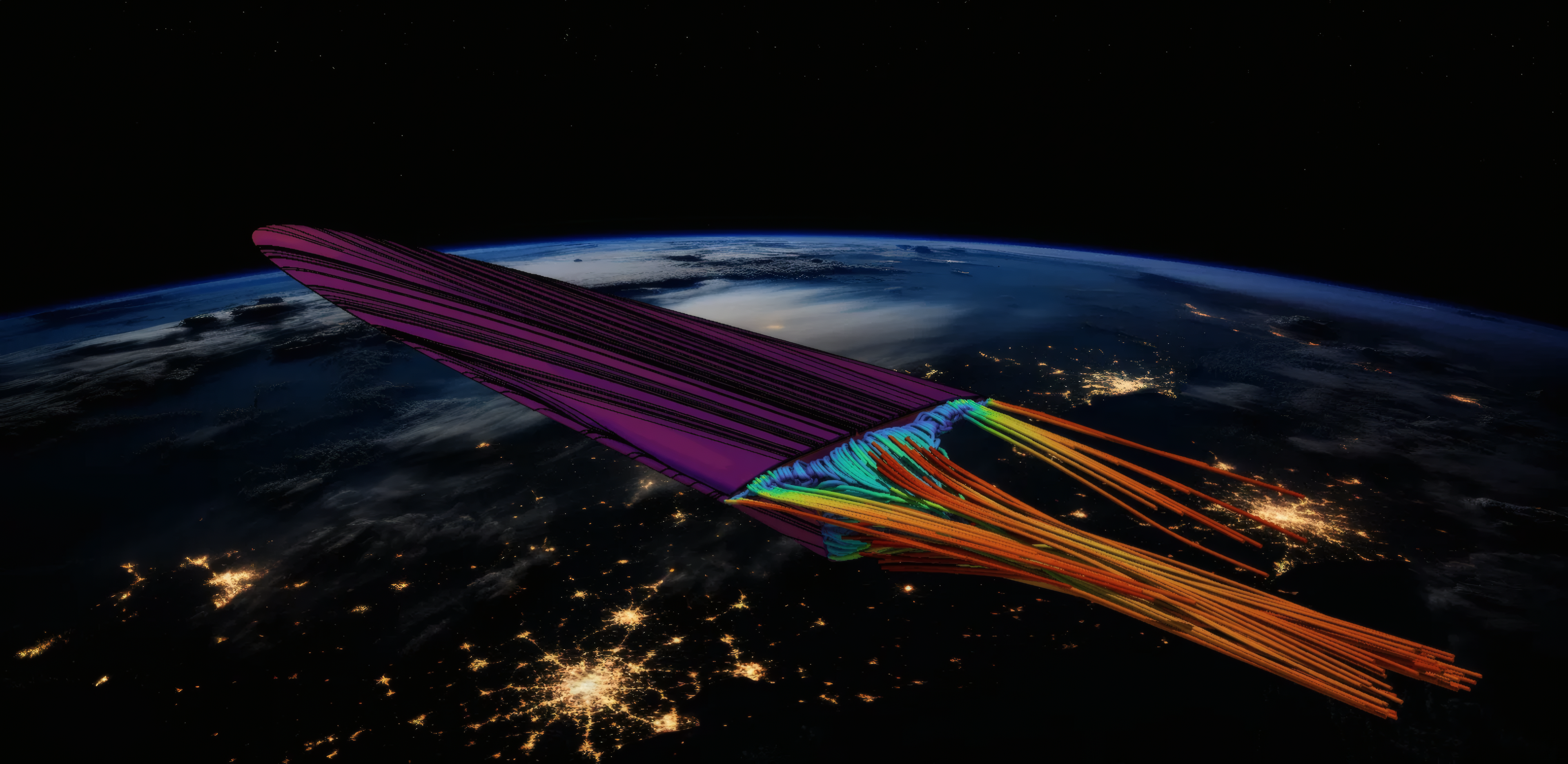
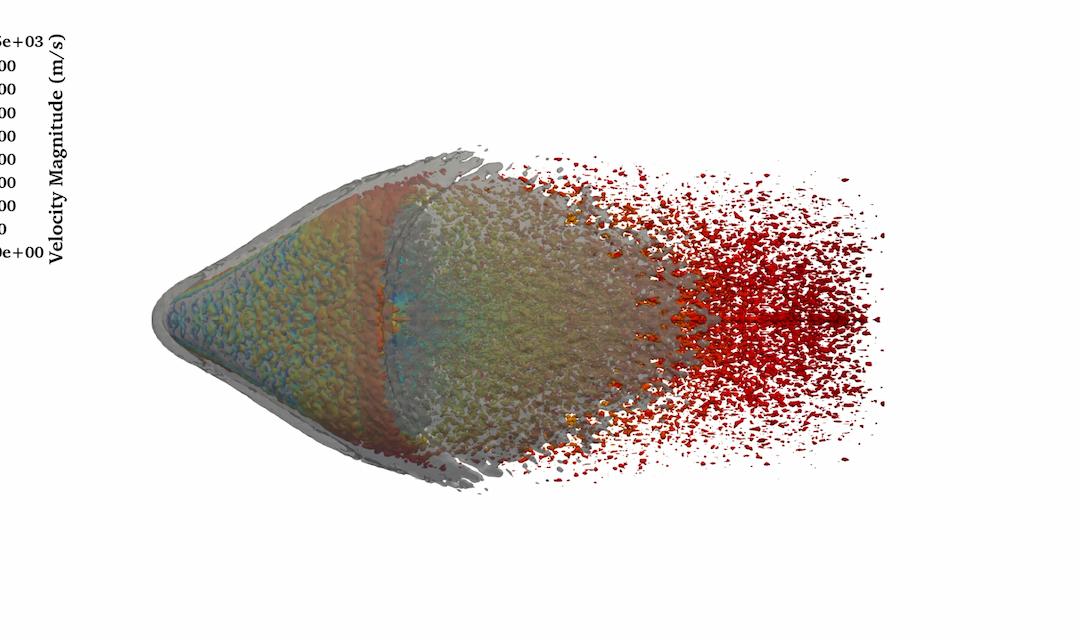
DSMC rarefied gas simulation
RAREFIED | DSMC

When Continuum Breaks Down

Particle-based simulation at 4,500 m/s — where traditional CFD can't follow

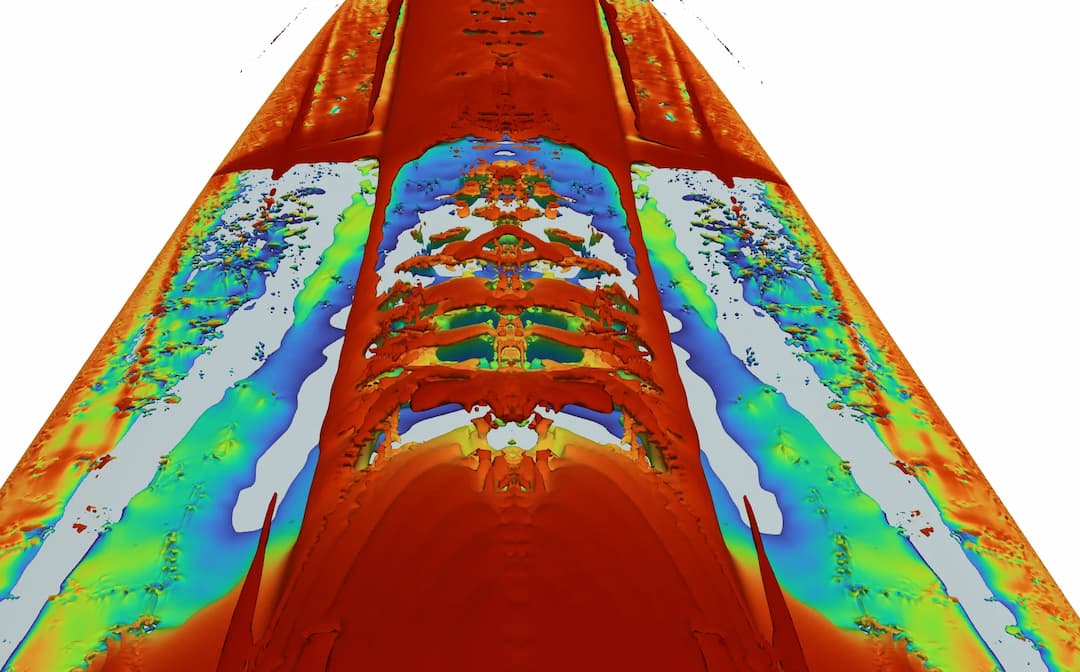
Hairpin vortices on waverider
HYPERSONIC | TURBULENCE

Turbulent Boundary Layer

Hairpin vortices on a waverider compression surface

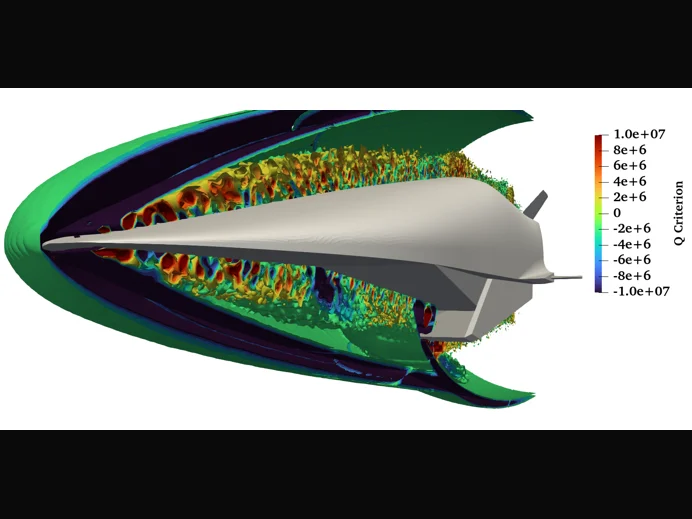
X-51 like vehicle simulation
HIGH MACH

X-51 Type Vehicle

High Mach number flow with Q-criterion visualization

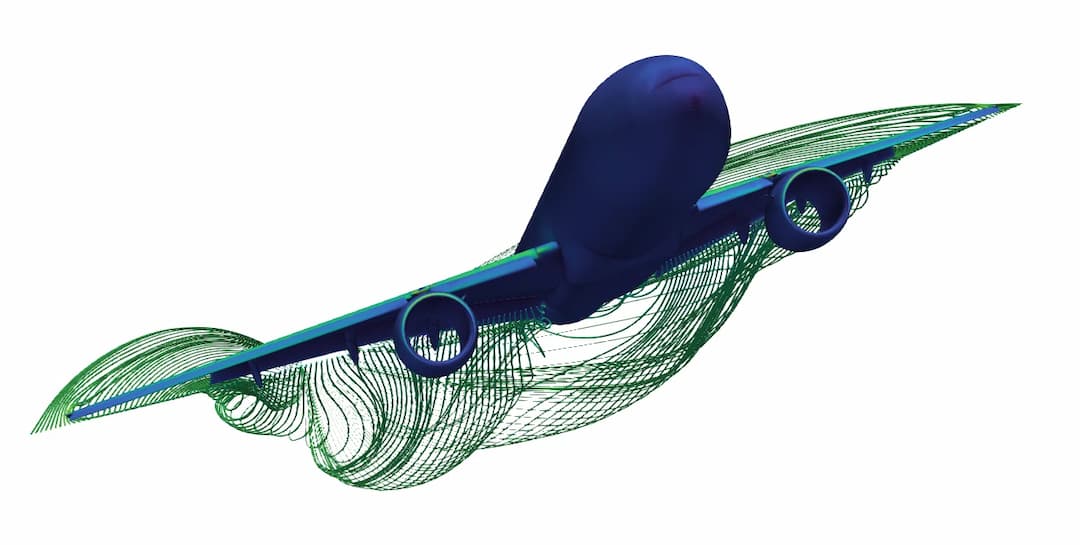
NASA CRM aircraft simulation
TRANSONIC

NASA Common Research Model

Wake vortex analysis, standard aerospace CFD validation case

Our process

Every project follows a structured approach designed to deliver engineering you can act on.

01

Understand

We define the engineering question not just "run a simulation," but what decision this analysis needs to support and what confidence level it requires.

02

Plan

We select methods, define the parametric space, and establish convergence and validation criteria. You'll know the approach, the tools, and the acceptance standards upfront.

03

Execute

Iterative design loops where needed: parameterization, mesh automation, CFD or DSMC, surrogate modelling, and optimization. Convergence verification at every stage.

04

Deliver

Decision-ready engineering: validated results, quantified confidence, and a clear narrative connecting analysis to your design choices.

Have a project in mind?

From single analyses to full iterative design campaigns. Bring us the flow problem.

Get in TouchView Manufacturing Services